
Overview (University Information)
Overview
In 1917, founder Tokujiro Shibata and other young volunteers gathered together to found Kokushikan, a private academy and predecessor to the university in Azabu Ward, Tokyo (present day Minami-aoyama, Minato City). Wishing to promote education that respects human growth, the school moved to its current location in Setagaya in 1919. In 1953, a junior college was established and in 1958, the university was established along with the Faculty of Physical Education. Subsequently, six more faculties were established by 2011 for a total of seven (the junior college was abolished in 2003). Starting in 1965, the first graduate school was established and today, there are a total of ten graduate schools.
Kokushikan University celebrated its 100-year anniversary in 2017. It is a comprehensive school that also includes Kokushikan Senior High School and Kokushikan Junior High School. Kokushikan has produced many public servants who contribute to the local society with a great sense of mission, choosing to become police officers, firefighters, teachers, paramedics, and more as a post-graduate path. Kokushikan ranks at the top nationally for the number of students who have passed these national examinations.
Following the Great East Japan Earthquake in 2011, Kokushikan University positioned itself as a disaster prevention university base, making basic education on disaster prevention mandatory for all new students, entering into cooperative agreements with local governments and related organizations, and working to train human resources that can contribute in times of disaster.
Kokushikan also contributes to society by giving educational research resources back to the community through open lectures, public use of its libraries, and cooperative initiatives to solve community issues.
Kokushikan University is making history without stopping as a glocal university open to the world and rooted in the community.
Remarks from the President
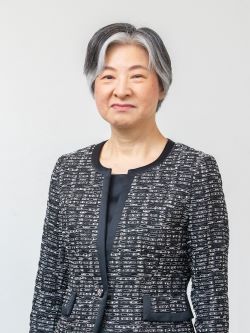 Junko Tahara(Ph.D)
President, Kokushikan University
Kokushikan University is a comprehensive university with five campuses of varying sizes in Tokyo, featuring ten graduate schools and seven faculties. It is the 31st largest university in Japan in terms of the number of undergraduate students among the country’s approximately 800 universities, and our students from all over Japan and overseas number about 13,000, including 746 international students from 13 countries and one region. Moreover, to help students improve their communication skills in foreign languages and grow to become future global leaders, we have concluded agreements with 60 universities and research institutes in 26 countries and one region, encouraging students to participate in long-term study abroad short-term language training abroad.
The history of Kokushikan dates back to 1917, which is 109 years ago. The university’s founder, Professor Tokujiro Shibata, established it with the determination to train human resources with wisdom and courage who can contribute to the international community by cultivating them physically and mentally as well as fostering their character through daily "practice" based on the spirit of Yoshida Shoin. The founding spirit of Kokushikan is to train "human resources who care for Japan and serve society and other people," which in other words means "patriots." According to the founder’s teachings, by practicing "reading, experience, and reflection" on a daily basis and through repeated "contemplation," we can nurture the four virtues of "sincerity, diligence, insight, and vigor" that make Kokushikan’s educational philosophy. As we value and inherit this founding spirit and educational philosophy, our university has so far sent out over 190,000 graduates to a variety of areas of society.
I would like to introduce three points about education at the university in recent years that we are proud of.
The first is the "university-wide general education subjects" that allow students to freely study liberal arts without being confined by boundaries of faculties and years. Here, students learn about their own school history and acquire wide-ranging knowledge to become problem-solving talent. The second is "disaster prevention education," which the university engages in with concerted efforts. Japan frequently is a site of natural disasters and so our university trains disaster prevention leaders equipped with the strength and kindness to help others. The third is the "AI data science education program" for which we have received certification from the Ministry of Education, Culture, Sports, Science and Technology. Working toward realizing the "human-centered AI society" that is both anticipated and striven for, we help students acquire basic skills to understand and utilize "mathematics, data science, and AI." "Disaster prevention leaders" and "AI data science" are minors that can be taken by students in any faculty.
Additionally, the university has been certified by the Ministry of Land, Infrastructure, Transport and Tourism as a national qualification training institution for drone piloting, which has allowed us to qualify numerous students. Moreover, at the School of Asia 21, it is possible to obtain a Class C coaching license as certified by the Japan Football Association. This license lets you coach clubs at Japanese elementary, middle, and high schools as well as in the 45 member countries of the Asian Football Confederation and other countries where this license is recognized.
Please take the time to read this university guide. Learning at Kokushikan is full of diverse personalities and vitality. Please pursue your very own original learning that you will find nowhere other than at Kokushikan University. I look forward to welcoming all of you as you join us here.
Junko Tahara(Ph.D) President, Kokushikan University
1963 - Born in Kanagawa Prefecture
1986 - Graduated from the College of Education, Yokohama National University
1988 - Earned an M.A. from the Graduate School of Education, Yokohama National University
1994 - Ph.D. in Health and Sports Sciences from the Graduate School of Health and Sport Sciences, Chukyo University
2023 - Visiting researcher at the Olympic Studies Centre of the International Olympic Committee
Academic and Professional Career:
Associate Professor, Faculty of Wellness, Chukyo Women’s University
2006 - Associate Professor, Faculty of Physical Education, Kokushikan University; promoted to Professor in 2009
2019 - 2024 - Dean of Students
2023 - Kokushikan University Councilor
2024 - Dean of the Graduate School of Sport System; Executive Director
2025 - President
Affiliations and Leadership Roles:
2014 - present Vice-President, International Pierre de Coubertin Committee (CIPC)
2018 - present Council Member, International Fair Play Committee (CIFP)
2021 - present Director, Bowls Japan
2023 - present Director, Women Sport International (WSI)
2024 - present President Chair, Japanese Pierre de Coubertin Committee (CJPC)
Awards and Recognition:
2021 - Vikelas Plaque, International Society of Olympic Historians (ISOH)
2022 - Distinguished Service Award, Japan Society for Sport and Gender Studies (JSSGS)
Research Interests:
Sports history, sports ethics

