
Ryo SAGISAKA, Lecturer and Principal Investigator (PI) of this lab. Under the philosophy of Re-Vita, which reexamines the meaning of "human life" and "saving," my laboratory builds on prehospital emergency care to study what it means to save a human life at three levels: the material, the interpersonal, and the societal. At the material level, I study the mechanisms of ventricular fibrillation and defibrillation using cardiac optical mapping and numerical models of myocardial electrical activity. At the interpersonal level, I study the behavior and psychology of bystanders who perform cardiopulmonary resuscitation (CPR), the field decisions of EMS personnel, and their training using MR and VR. At the societal level, I work on the epidemiology of out-of-hospital cardiac arrest and the analysis of ambulance service systems. By combining epidemiology, behavioral science, basic physiology, and computational science, I aim to create new systems that make it possible to save more lives.
本研究室では、「人の命」と「救う」の意味を問い直すRe-Vitaという理念のもと、病院前救急医療を基盤として、人の命を救うとはどういうことかを、物質、人と人との間、社会の三つの水準から研究しています。物質の水準では、心臓の光学マッピングと心筋電気活動の数値モデルを用いて、心室細動の発生と除細動の機序を調べています。人と人との間の水準では、居合わせた市民による心肺蘇生(バイスタンダーCPR)の行動と心理、救急隊員の現場判断と、MR・VRを用いたその教育訓練を扱っています。社会の水準では、院外心停止の疫学と救急搬送体制の分析に取り組んでいます。疫学、行動科学、基礎生理学、計算科学などを横断し、新たに「救える」仕組みをつくることを目指しています。
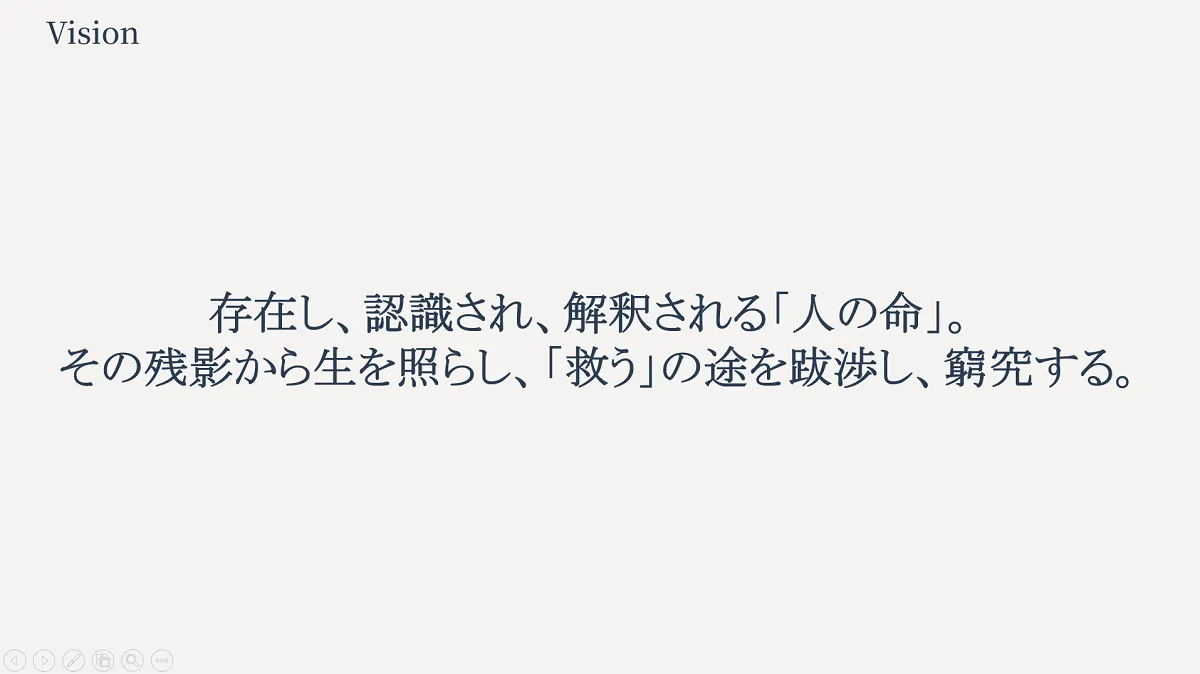
Re-Vitaのビジョン
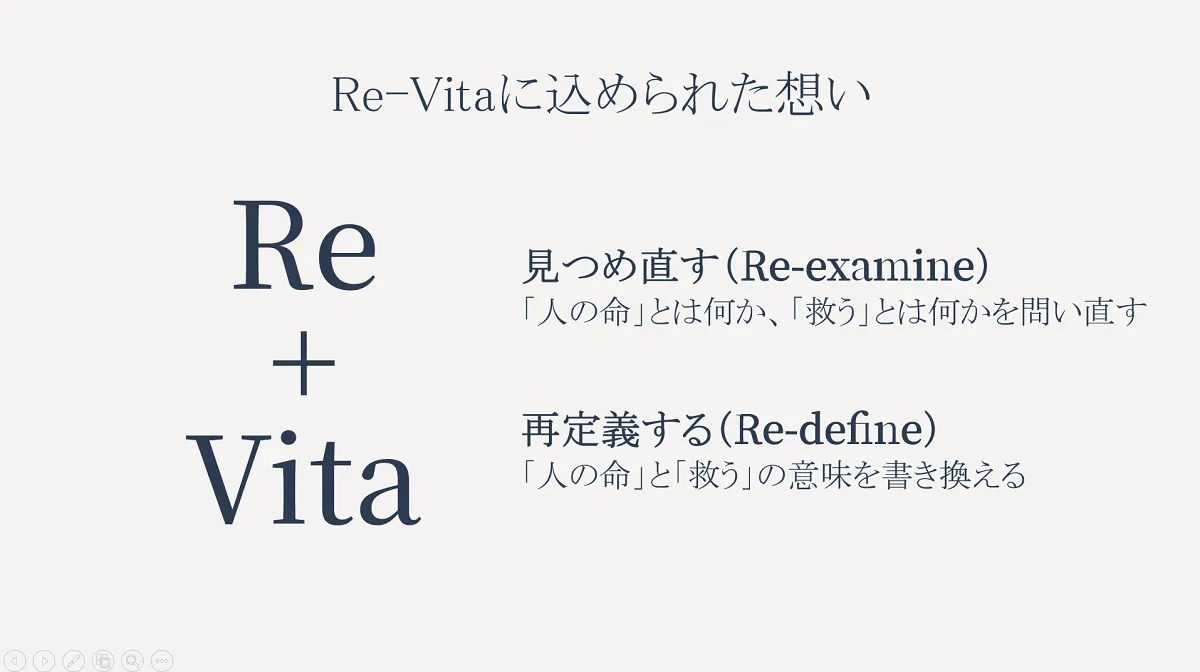
Re-Vitaの名前に込めた意味
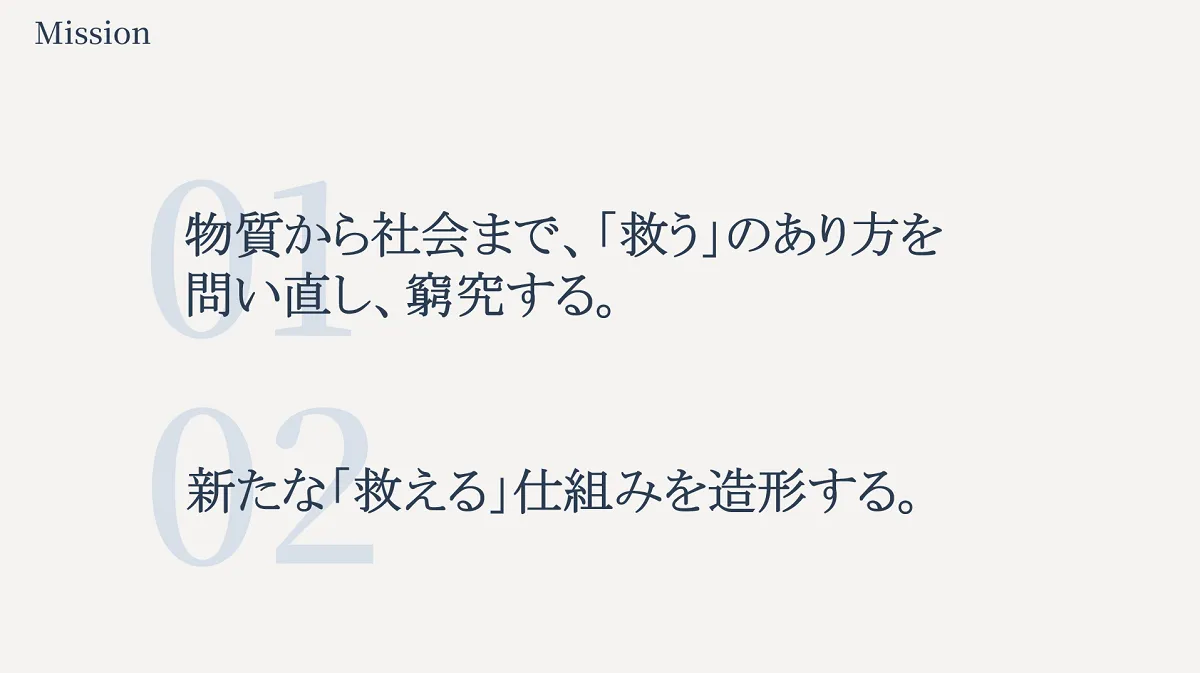
Re-Vitaのミッション
研究分野における現在の問題点や関心事、見解など
Ambulance calls in Japan continue to increase, and the time it takes for an ambulance to reach the scene has grown longer over the long term. Adding ambulances and crews alone cannot keep up, and the question is how to use limited staff and vehicles. For out-of-hospital cardiac arrest, survival depends heavily on whether someone nearby can perform CPR and whether an AED can be brought in time, and these chances differ by region. I am interested in understanding what is happening in emergency care through nationwide records and field data, and in showing what should change to save more lives.
救急出動件数は増え続け、救急車が現場に着くまでの時間は長期的に延びています。救急車や隊員を増やすだけでは追いつかず、限られた人員と車両をどう使うかが問われています。院外心停止についても、救命できるかどうかは、倒れた場所の近くにCPRを行える人がいるか、AEDが届くかに大きく左右され、その差は地域によっても異なります。救急医療の現場で何が起きているかを全国の記録や現場のデータから捉え、救える人を増やすために何を変えればよいかを示すことに関心を持っています。
主な研究テーマ①
Epidemiology of Prehospital Emergency Care 病院前救急医療の疫学
Using nationwide records of out-of-hospital cardiac arrest (Utstein-style data) and ambulance transport records from fire departments, I analyze what happens between the emergency call and hospital arrival, and how it affects patient outcomes. For cardiac arrest, I have clarified how outcomes relate to dispatcher-assisted CPR by bystanders, AED use by the public, and the timing of epinephrine administration and airway management by paramedics, and have shown that differences in treatment times among prefectures lead to regional differences in outcomes. For ambulance services as a whole, I also analyze ambulance transport records from fire departments. In addition, I have analyzed how callers describe cardiac arrest in words, and examined how dispatchers can ask questions to recognize it earlier. My goal is to reduce the role that chance plays in whether a life is saved.
全国の院外心停止の記録(ウツタイン様式)や消防本部の救急搬送記録を用いて、119番通報から病院到着までの間に何が起きているか、それが傷病者の転帰にどう影響するかを分析しています。心停止については、通信指令員の口頭指導による市民のCPR、市民によるAEDの使用、救急救命士によるアドレナリン投与や気道確保のタイミングと転帰との関係を明らかにし、都道府県ごとの処置時間の違いが転帰の地域差につながることを示してきました。救急搬送全体についても、消防本部の救急搬送記録を用いた分析を進めています。また、通報者が心停止をどのような言葉で伝えるかを分析し、通信指令員が心停止を早く見抜くための問いかけ方も検討してきました。救命が偶然に左右される幅を小さくすることを目指しています。
Understanding How Callers Express Cardiac Arrest and Improving How Dispatchers Ask, Grant-in-Aid for Research Activity Start-up, FY2018-2019
「通報者の心停止表現の理解と通信指令員の問いかけ方法の検討」、科学研究費助成事業 研究活動スタート支援、2018-2019年度
Cardiac Arrests at Railway Stations and Bystander Resuscitation in Practice, Grant-in-Aid for Scientific Research (C) (Co-investigator), FY2023-2024
「鉄道駅で発生した心停止の発生状況と、バイスタンダーによる救命処置の実態調査」、科学研究費助成事業 基盤研究(C)(分担)、2023-2024年度
主な研究テーマ②
Education and Training Using XR XRを活用した救急隊と市民の教育訓練
I study education and training methods using XR technologies so that EMS personnel, paramedics, and citizens can safely and repeatedly practice the decisions and skills needed in the field. At a paramedic training school, I tested the effect of training with live-action VR in a randomized controlled trial. For citizens, I have developed VR-based CPR training and computer graphics that let learners experience agonal breathing. For EMS crews, I developed an interactive learning system using mixed reality (MR). Through a head-mounted display, learners examine a computer-generated patient, while an instructor in a remote location changes the vital signs. In a field trial with EMS personnel, learners reported high motivation and a strong sense of realism.
救急隊員や救急救命士、市民が、現場で必要な判断と手技を安全に繰り返し学べる環境をつくるため、XR技術を用いた教育訓練手法の研究に取り組んでいます。救急救命士養成校では実写VRを用いた実習の効果をランダム化比較試験で検証し、市民向けにはVRによる心肺蘇生法講習や、死戦期呼吸を体験するためのCGを開発してきました。救急隊向けには複合現実(MR)を用いたインタラクティブ学習システムを開発しました。学習者はヘッドマウントディスプレイを通して傷病者のCGを観察し、指導者は離れた場所からバイタルサインを変更できます。救急隊員を対象とした実証実験では、高い学習意欲と臨場感が得られました。
Development of an Interactive Learning System Using Augmented Reality for Paramedics and Emergency Technicians, Promotion Program for Scientific Fire and Disaster Prevention Technologies (Fire and Disaster Management Agency), FY2023-2024
「救急救命士・救急隊員に対する拡張現実を用いたインタラクティブ学習システムの開発」、消防防災科学技術研究推進制度(消防庁)、2023-2024年度
Development of a Paramedic Education Program Using Simulated Emergency Scenes with Advanced VR Technology, Grant-in-Aid for Scientific Research (C) (Co-investigator), FY2022-2024
「先端技術VRによる救急現場疑似体験を活用した救急救命士教育プログラムの開発」、科学研究費助成事業 基盤研究(C)(分担)、2022-2024年度
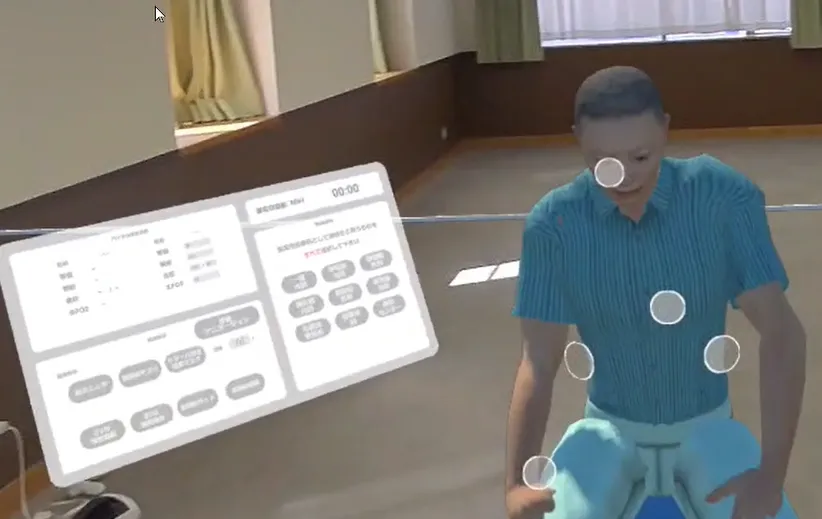
MRで表示した傷病者のCGと観察用のボタン
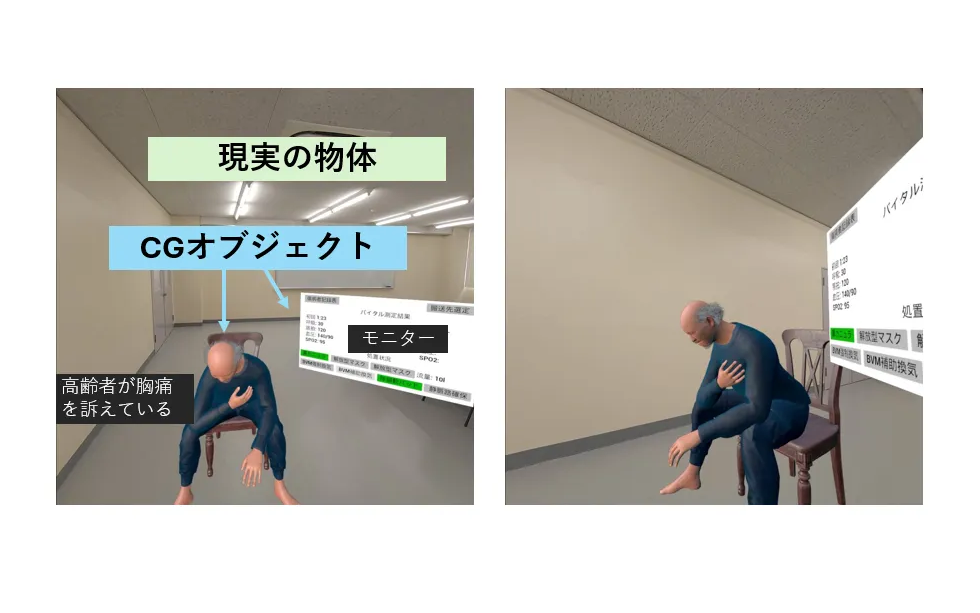
現実の空間に傷病者のCGとモニターを重ねて表示した様子
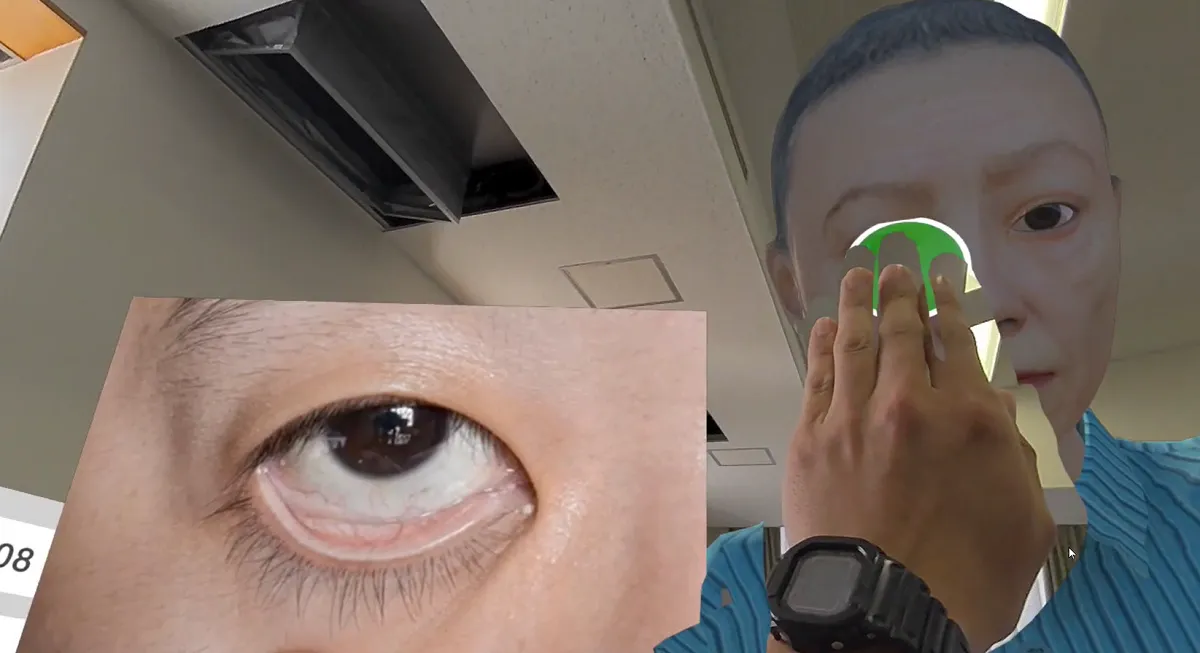
眼瞼結膜の観察(観察したい部位に触れると画像が表示される)
その他の研究テーマ
Bystander Behavior and Psychology 市民の救助行動と心理
I study why bystanders at the scene of a cardiac arrest step in to help, or cannot. Through qualitative research analyzing the accounts of people who helped and people who did not, and through surveys of the psychological stress felt by those who performed CPR, I explore the conditions in society that allow people to step in and help.
心停止の現場に居合わせた市民が、なぜ助けに入り、あるいは入れないのかを研究しています。救助にあたった人や救助を行わなかった人の語りを分析する質的研究や、CPRを行った市民の心的ストレスの調査を通じて、市民が助けに入れる社会の条件を探っています。
Ambulance Service Systems and Public-Private Partnership 救急搬送体制と官民連携
Together with fire departments, I analyze the relationship between ambulance utilization and response times, as well as transports of patients with minor conditions. Based on an agreement with the Kawasaki City Fire Bureau, I am also studying the actual situation of transfers between hospitals. In Nago City, Okinawa, I am developing indicators to evaluate a program in which the fire department and private ambulance services work together to provide emergency transport.
救急車の稼働状況と現場到着時間の関係や、軽症者の搬送の実態を、消防本部と共同で分析しています。また、川崎市消防局との協定に基づき、医療機関の間の転院搬送の実態を調査しています。沖縄県名護市では、消防と民間救急が連携して救急搬送を担う事業について、その効果を評価する指標を検討しています。
地域連携・社会貢献活動
Bringing Research Back to Emergency Care in Society 研究を救急医療の現場と制度に返す
I work to bring the knowledge gained from research back to emergency care systems and practice. In Nago City, Okinawa, I take part as a regional revitalization entrepreneur and help evaluate a program to improve emergency transport in the northern region. As representative director of OPHIS, a general incorporated association, I also work on building emergency care systems through public-private partnership. In academic societies, I serve as a councilor of the Japanese Society of Reanimatology and the Japanese Society for Emergency Medicine, and as a member of the editorial committee for the first aid chapter of the JRC Resuscitation Guidelines 2020 and 2025, I have contributed to developing Japan's resuscitation guidelines.
研究で得た知見を、救急医療の制度や現場に返す活動に取り組んでいます。沖縄県名護市には地域活性化起業人として参画し、北部地域の救急搬送体制の改善に向けた事業の評価に携わっています。一般社団法人OPHISの代表理事として、官民連携による救急医療の仕組みづくりにも取り組んでいます。学会活動では、日本蘇生学会と日本臨床救急医学会の評議員を務めるとともに、JRC蘇生ガイドライン2020および2025のファーストエイド章の編集委員として、国内の蘇生ガイドラインの作成に携わっています。
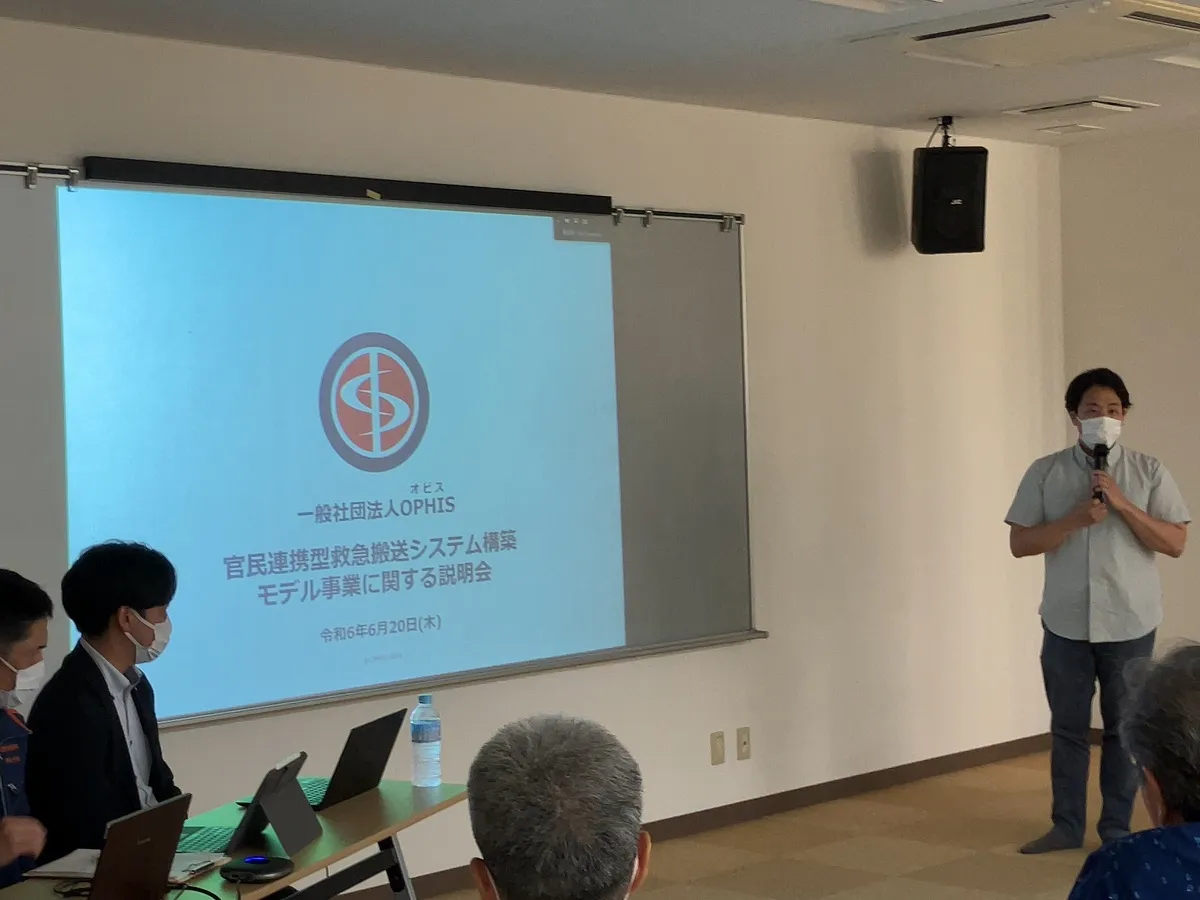
官民連携型救急搬送システム構築モデル事業の説明会
研究活動
In my laboratory, graduate students conduct research on prehospital emergency care. Each student goes through the full research process for their own topic: setting the question, planning the study, collecting and analyzing data, and writing a thesis and papers. Depending on the question, students choose methods ranging from statistical analysis of nationwide records, to developing VR and video analysis tools, to qualitative research based on interviews. In regular seminars, students report on their progress and discuss their work, and they also take on conference presentations and paper writing.
本研究室では、大学院生が病院前救急医療に関する研究に取り組んでいます。学生は各自の研究テーマに沿って、問いの設定、研究計画の立案、データの収集と解析、論文執筆までの一連の過程を経験します。全国の記録データの統計解析から、VRや動画解析の開発、聞き取りによる質的研究まで、問いに応じて方法を選びます。定期的なゼミでは進捗報告と議論を行い、学会発表や論文執筆にも挑戦します。
所属学生の修論のテーマ、キーワード(一例)
- Development of Computer Graphics for Experiencing Agonal Breathing in VR
VRを用いた死戦期呼吸を体験するためのCGの開発
Keywords: VR, agonal breathing, computer graphics, citizen education
- Psychological Stress in CPR Training Using VR
VRを用いた心肺蘇生法教育における心理的ストレス
Keywords: VR, CPR training, psychological stress, citizen education
- Estimating Chest Compression Position Using AI
AIを用いた胸骨圧迫位置の推定
Keywords: AI, machine learning, chest compression, pose estimation
- Detecting the Carotid Pulse Using Video Analysis
動画解析による総頸動脈拍動の検出
Keywords: video analysis, cardiac arrest recognition, carotid artery, contactless measurement
- Experiences of People Who Did Not Help at the Scene of a Cardiac Arrest
心停止現場で救助を行わなかった人の経験
Keywords: bystander, bystander inaction, qualitative research, narratives
- Association Between Psychological Traits and Intention to Perform CPR
心理的特性とCPR実施意思の関連
Keywords: intention to perform CPR, psychological traits, university students, bystander
教員メッセージ
I am Ryo Sagisaka, a lecturer and the head of this laboratory. Drawing on my experience working in the field as a paramedic, I study resuscitation from cardiac arrest and the systems of emergency care. From the electrical signals of heart cells to the behavior of citizens and the organization of ambulance services, I think about what it means to "save" at every scale. I do not limit myself to one field, and I choose the methods that fit each question from epidemiology, behavioral science, computational science, and engineering. In my lab, students start from simple questions they have had in the field and look for answers through data and discussion. Let us question together what is taken for granted in emergency care, and think about new systems that can save more lives.
研究室を主宰する講師の匂坂量です。救急救命士として現場に立った経験をもとに、心停止からの救命と救急医療の仕組みを研究しています。心臓の細胞の電気信号から、市民の行動、救急搬送の体制まで、対象の大きさを問わず「救う」とはどういうことかを考えています。方法も分野にこだわらず、疫学、行動科学,計算科学、工学のなかから問いに合ったものを選びます。研究室では、学生が現場で抱いた素朴な疑問を出発点に、データと議論を重ねて答えを探します。救急医療の当たり前を一緒に問い直し、新たに救える仕組みを考えていきましょう。
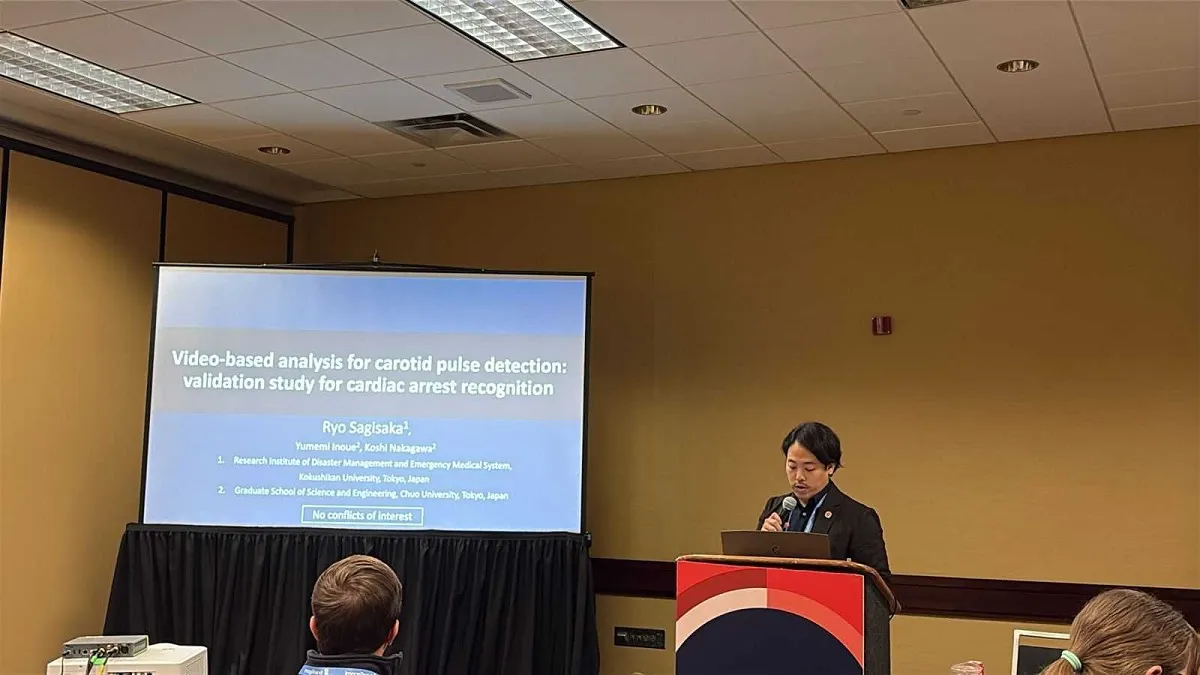
国際学会での口頭発表
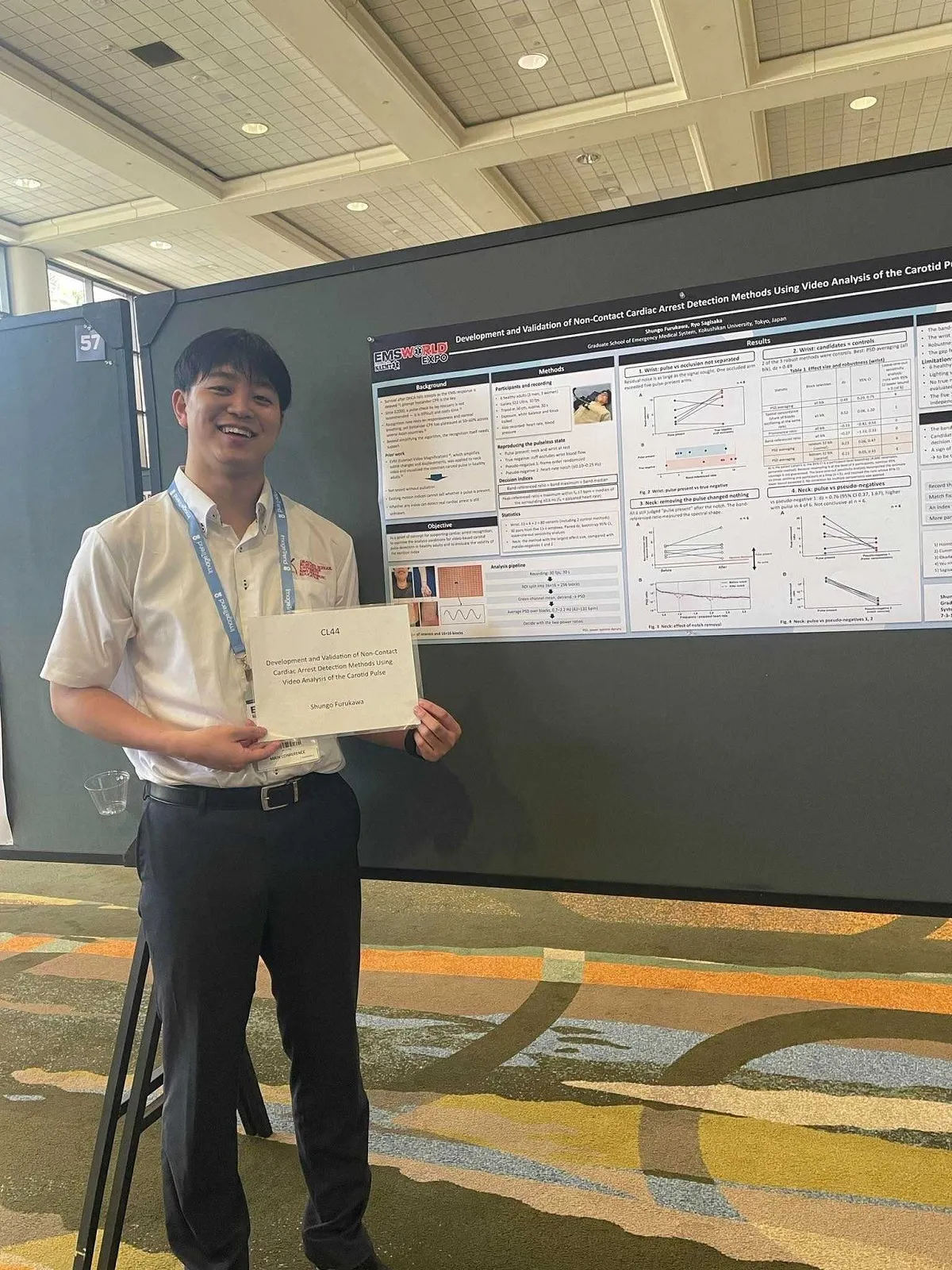
国際学会のポスターの前で
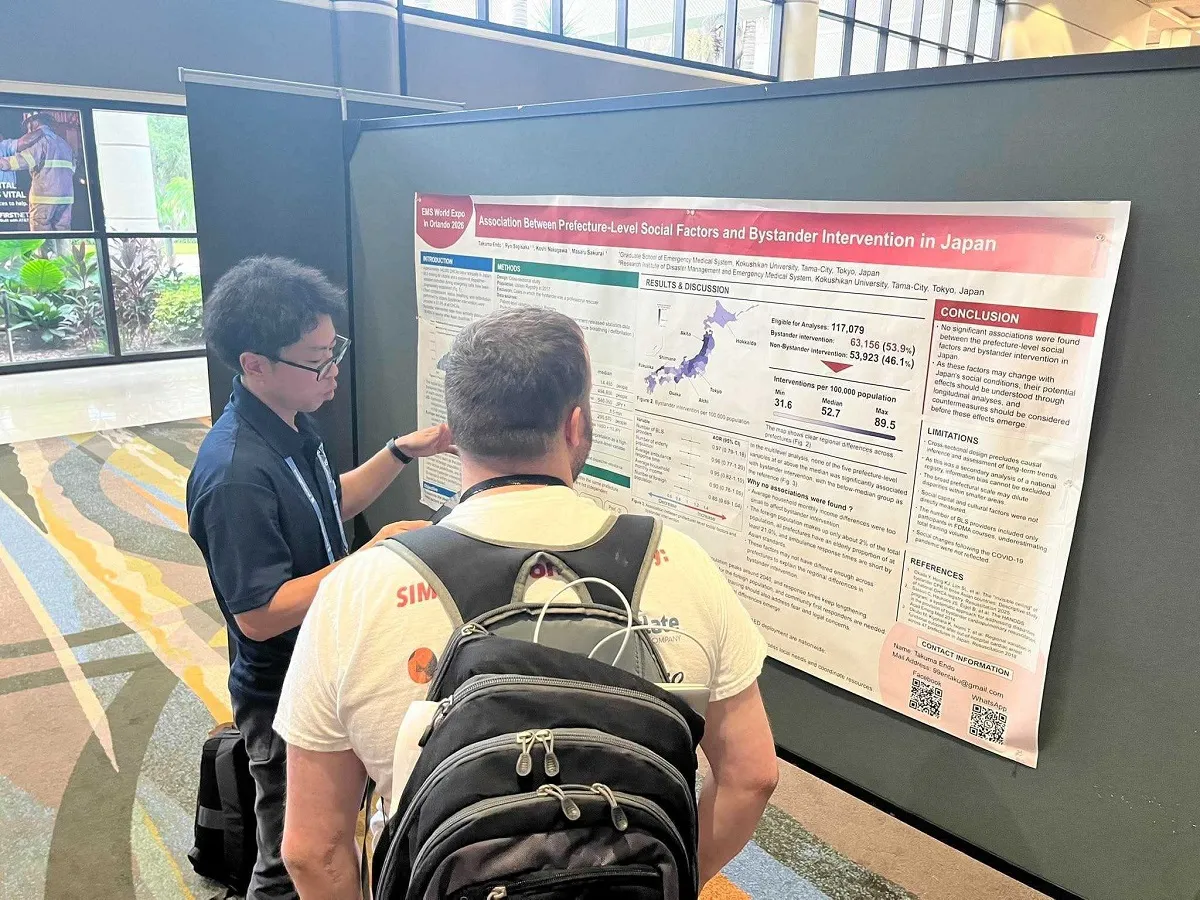
院生のポスター発表の様子